
.jpg)
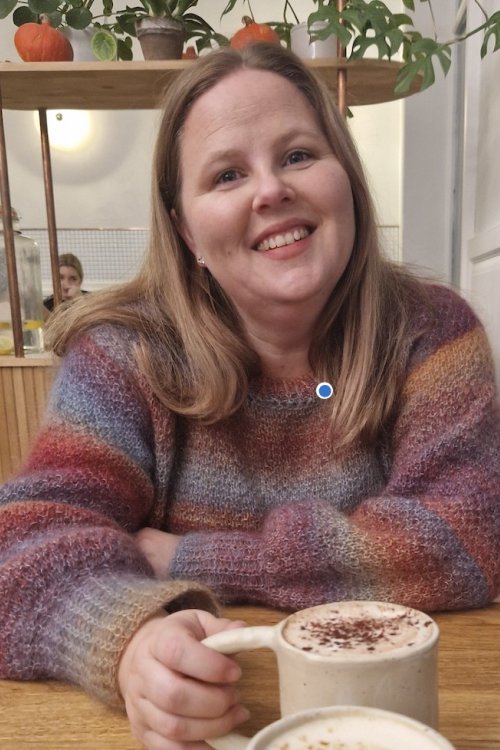
Batoul Hassoun is 37 years old, comes from Syria, and has lived in Norway for six years and seven months. She is married and has one child. With a master's degree in Management Information Systems from her home country, she has chosen to build on her expertise at NLA Hauge School of Management, which is NLA University College's economics education program.
– Why did you choose to study economics in Norway and specifically at NLA Hauge School of Management?
– I have always been interested in economics and wanted to strengthen my knowledge of the Norwegian system. Although I took a master's degree in Management Information Systems in Syria, I felt a need to better understand the Norwegian economy and improve my Norwegian language skills, especially in professional terminology. My studies in Syria were in Arabic, with some subjects in English. I also wanted to learn more about the practical aspects of academic life in Norway and build a social network here. In addition, many employers have less confidence in education from countries outside the EU, so I wanted a Norwegian degree to make the path into working life easier.
%20(1).jpg)
– I chose NLA Hauge School of Management because the college combines academic quality, value-based leadership, and an inclusive environment. It fits well with my values and my desire to develop both professional and personal skills.
– What has been the most challenging and the most positive aspect of being a student in a new country with a different language and study system?
– The most challenging thing has been the language. Although I understand a lot, it can be difficult to express myself precisely both in writing and orally. Norway also has many dialects, and sometimes they can be challenging to understand. At the same time, this has motivated me to further develop my language skills. The most positive thing is that I have learned an incredible amount both professionally and personally. I have also experienced that the lecturers and fellow students are open and helpful, which makes it easier to thrive and feel included.
– Do your experiences from Syria give you a different perspective in discussions and group work?
– Yes, absolutely. I have experience from another country, both in terms of culture and working life. This means that I often see things from multiple perspectives, and I try to contribute a global view when we discuss economics, management, and society.
– Do you see similarities between economic challenges in Norway and in your home country?
– Although the conditions are very different, there are some similarities. Both countries face challenges related to resource management and unemployment, but at different levels. In Norway, it is often about efficiency, sustainability, and technology, while in Syria, it is more about stability and basic economic security.
– What do you hope to use your education for after graduation?
– I want to work in economics or administration, preferably in the public sector or in an organization that works with socially beneficial projects. My goal is to combine my economic expertise with the desire to contribute to value creation and sustainable development. In addition to my studies, I work part-time at YWCA-YMCA Global as a financial officer. It has given me useful experience with financial work in a value-based organization and strengthened my motivation to contribute positively to society.
– What is your best memory from your studies so far?
– One of my best memories is from the group project in entrepreneurship and innovation. There, I experienced for the first time being confident enough to contribute actively in Norwegian. It gave me both confidence and motivation to continue developing, she says with a smile at the end.
.jpg)

.jpg)
.jpg)



.jpg)