
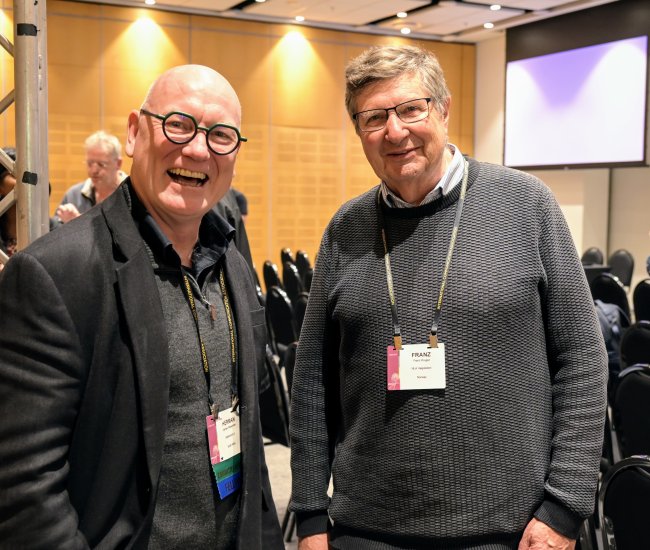
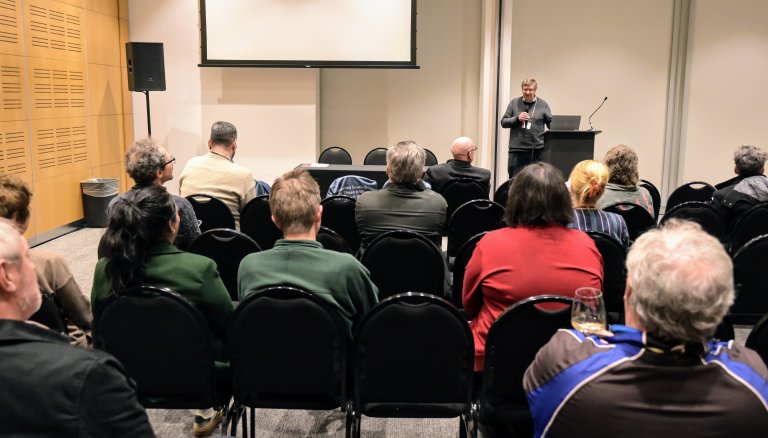
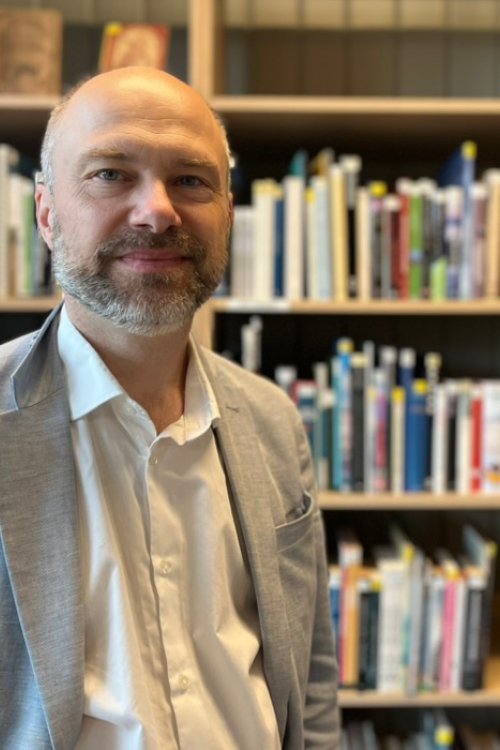
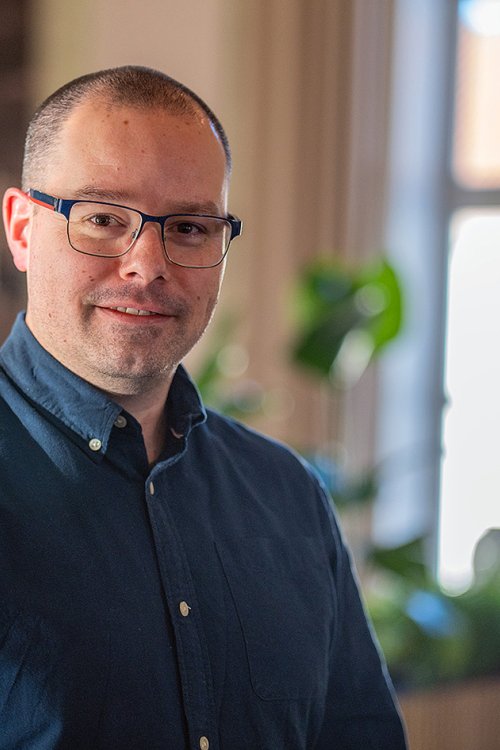
This is one of the central questions explored in a new anthology edited by Franz Krüger, Associate Professor of Journalism at NLA University College in Kristiansand. The book was recently launched during the prestigious International Communication Association (ICA) conference in Cape Town, where it attracted considerable interest from both researchers and media professionals. In the photo, Krüger is pictured alongside his co-editor, Herman Wasserman.
Although Krüger now lives in Kristiansand, he is originally from South Africa and is affiliated with the Wits Centre for Journalism in Johannesburg. He also serves as Assistant Press Ombud at the South African Press Council and is widely recognized as one of the country’s leading experts in journalism ethics.
New perspectives on marginalized media
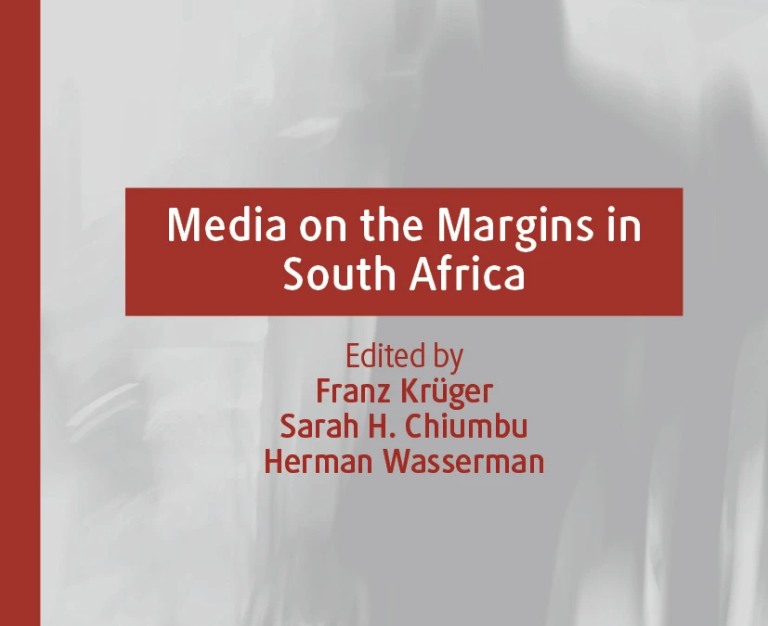
The anthology Media on the Margins in South Africa examines how media operate on the margins of society. Media reforms introduced after apartheid created conditions that enabled the sector to develop, allowing marginalized communities to play a more active role in public life. Although local and independent media have grown significantly since the end of apartheid, access to media remains unevenly distributed.
“I believe the book’s most important contribution is that it applies a new perspective to local and community media,” says Krüger.
He highlights the concept of marginality as key to understanding the sector.
Revealing similarities and vulnerabilities
The book combines theoretical perspectives with empirical studies, offering new insights into how small media organizations operate. One of its key findings is that community radio stations and small local newspapers have more in common than previously assumed.
“Both are often commercially oriented and dependent on public funding, even though community radio is intended to be non-profit and non-commercial,” Krüger explains.
The anthology also discusses the role of volunteers in these media organizations. In many cases, volunteering is driven more by the opportunity to gain experience and enter the job market than by idealism alone.
At the same time, the research shows that although the number of media outlets has increased, significant weaknesses remain.
“Many of these media outlets are concentrated in more affluent areas, reinforcing inequalities in access to information,” says Krüger.
A democratic issue
For Krüger, the topic is about more than academic research.
“Inequality in access to information is a societal problem that can undermine the quality of democracy. South Africa’s efforts to overcome the legacy of apartheid must also include addressing this form of inequality,” he emphasizes.
He hopes the book can contribute to better policymaking, both in South Africa and in other countries facing similar challenges.
“If these media are better understood, the frameworks that support them can be strengthened. The perspective we develop can also be applied to analyses of other countries,” he says.
International launch
Krüger is the co-editor of the book together with Herman Wasserman and Sarah Chiumbu, both leading researchers in journalism and media studies in South Africa. He also contributes four chapters to the book, all of which are available open access and can be read here: Media on the Margins in South Africa | Springer Nature Link
.jpg)
.jpg)
.jpg)


.jpg)




.jpg)